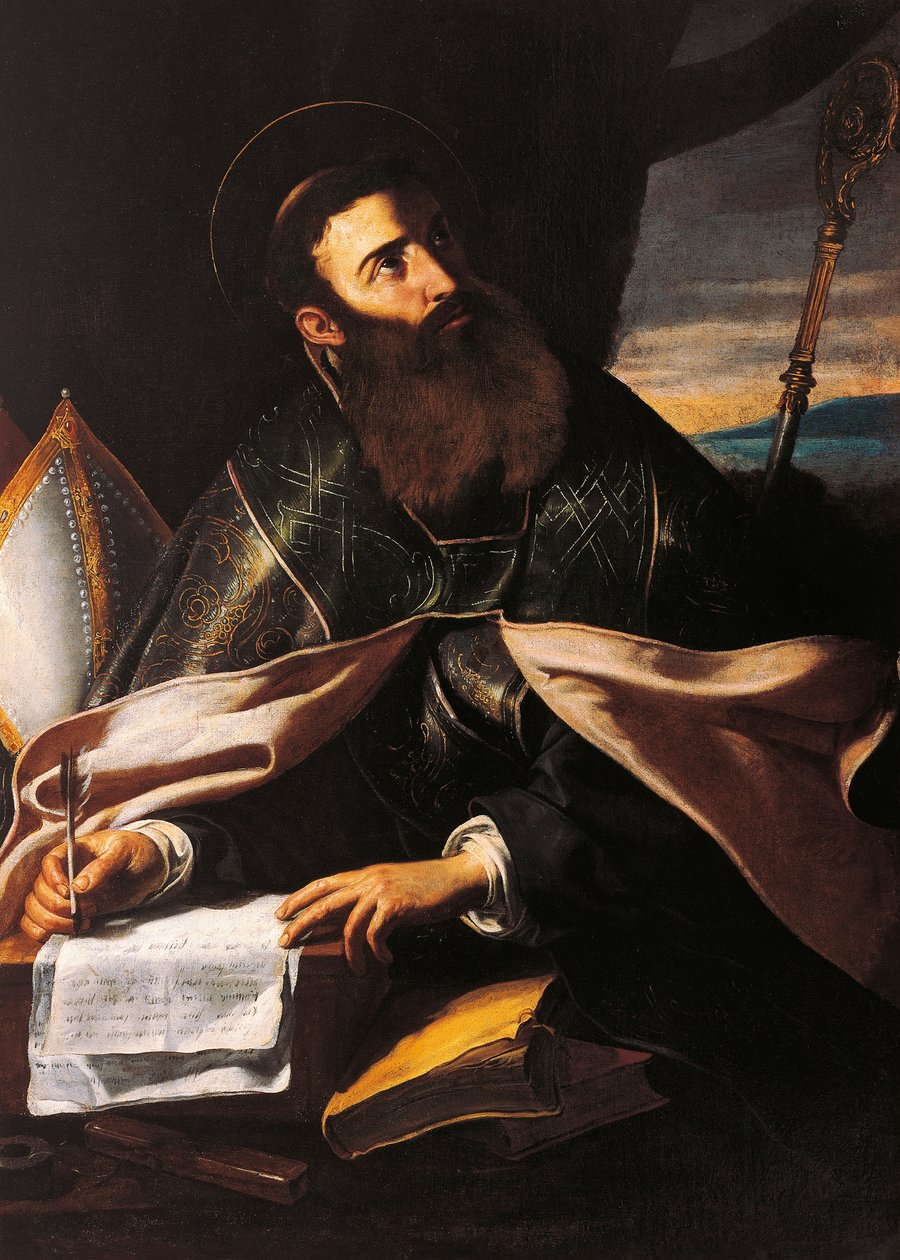
Augustine of Hippo was a pivotal theologian and philosopher in the early Christian Church, whose writings profoundly influenced Western Christianity and philosophy. His intellectual journey from Manichaeism and Neoplatonism to orthodox Christianity is chronicled in his seminal work, 'Confessions'. He is considered one of the most important Church Fathers.
Prayer
Daily offices, contemplative prayer, wrote extensively on prayer
Fasting
Regular fasting days, moderation in all things
Challenges Faced
Augustine struggled with a prolonged period of intellectual and spiritual searching, moving through Manichaeism and Neoplatonism before finding satisfaction in Christianity. His early life was marked by a struggle with concupiscence and sexual sin, as famously recounted in his 'Confessions'. He also faced significant pastoral challenges as a bishop, including combating various heresies (Donatism, Pelagianism) and leading his flock during the tumultuous decline of the Roman Empire, culminating in the Vandal siege of Hippo.
Personal Struggles
In his youth, Augustine struggled deeply with sexual desires and lust, living with a concubine for many years and fathering a child outside of marriage. He also experienced intellectual pride and a period of profound spiritual restlessness and doubt before his conversion. The death of his beloved mother, Monica, and his son, Adeodatus, caused him significant emotional pain.
Born Aurelius Augustinus in Tagaste, Numidia (modern-day Algeria) in 354 AD, Augustine was raised by a pagan father, Patricius, and a devout Christian mother, Monica. He received an excellent classical education, excelling in rhetoric, and initially pursued a career as a rhetorician in Carthage, Rome, and Milan. During his youth, he lived a hedonistic lifestyle and fathered an illegitimate son, Adeodatus, with a concubine. For nine years, he was a follower of Manichaeism, a dualistic religion, before becoming disillusioned with its teachings. He then explored Neoplatonism, which helped him move away from materialism and understand the concept of a spiritual God. His intellectual and spiritual journey culminated in his conversion to Christianity in 386 AD in Milan, largely influenced by the preaching of Bishop Ambrose and the persistent prayers of his mother. He was baptized by Ambrose in 387 AD. After his conversion, he returned to North Africa, sold his inherited property, and founded a monastic community. In 391 AD, he was reluctantly ordained a priest in Hippo Regius, and in 395 AD, he became the Bishop of Hippo, a position he held until his death in 430 AD. As bishop, he dedicated himself to preaching, teaching, and writing, tirelessly defending Christian doctrine against various heresies, including Manichaeism, Donatism, and Pelagianism. His prolific writings shaped Christian theology for centuries, addressing topics such as original sin, grace, predestination, and the nature of the Church. He died during the Vandal siege of Hippo, an event that symbolized the decline of the Western Roman Empire.